
Head of the Laboratory Clinical Microbiology of the St. Elisabeth Hospital Tilburg, The Netherlands
BIOGRAPHY

DEC 01, 2022 9:00 AM PST
"From soup to nuts" The journey of a sample through an automated clinical microbiology lab
Speaker
Date & Time
Date: December 1, 2022
Time: 9:00am PST, 12:00pm EST, 6:00pm CET
Time: 9:00am PST, 12:00pm EST, 6:00pm CET
Abstract
98% of in-patients will undergo a diagnostic test during a hospital stay.1 With the increased focus on the accuracy of diagnostic test results needed to make informed decisions to treat outbreaks, antimicrobial resistance, and hospital acquired infections, optimizing your microbiology lab has never been more important. What does this look like? First, this means standardizing testing in the lab to produce consistent, timely quality results, and scaling the capacity of the lab to handle surges in patient specimen volumes. Next, it’s about accelerating turn-around time for specimen processing, so your lab can support the speed of diagnostic testing needed for clinicians to make the timely decisions required to manage their patients.2,3 During this webinar you will learn how automation, technology and change management can help improve your laboratory productivity KPIs and impact patient management.
Learning Objectives:
-
Describe how the combination of automated technologies and change management can improve laboratory capacity and productivity.
-
Illustrate how improvements in laboratory operational efficiency benefit turnaround time for patient results.
-
Understand how automated solutions for MALDI-ToF target preparation can help streamline labor-intensive laboratory processes
References:
- Ngo A, Gandhi P, Miller WG. Frequency that laboratory tests influence medical decisions. J ApplLab Med. 2017;1(4):410-414.
- Mutters NT, Hodiamont CJ, de Jong MD, Overmeijer HP, van den Boogaard M, Visser CE. Performance of Kiestra total laboratory automation combined with MS in clinical microbiology practice. Ann Lab Med. 2014;34(2):111-117. doi:10.3343/alm.2014.34.2.111
- Thomson RB Jr, McElvania E. Total Laboratory Automation: What Is Gained, What Is Lost, and Who Can Afford It?. Clin Lab Med. 2019;39(3):371-389. doi:10.1016/j.cll.2019.05.002
Webinars will be available for unlimited on-demand viewing after live event.
Labroots is approved as a provider of continuing education programs in the clinical laboratory sciences by the ASCLS P.A.C.E. ® Program. By attending this webinar, you can earn 1 Continuing Education credit once you have viewed the webinar in its entirety.
You May Also Like
JAN 14, 2026 | 10:00 AM

Join us for an insightful webinar to discuss a holistic approach to testing for TB in a clinical setting. Tuberculosis remains a global health challenge and accurate, timely diagnosis is cri...
JAN 15, 2026 | 8:00 AM
Personalized medicine promises to significantly improve patient outcomes, but achieving this requires a deep understanding of human health and disease mechanisms at the molecular level. The...
JAN 20, 2026 | 11:00 AM
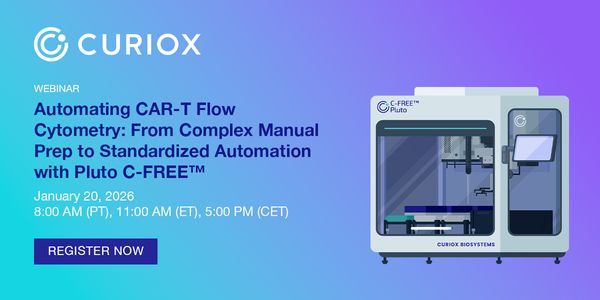
CAR-T translational research demands precise, reproducible, and scalable flow cytometry workflows. Manual centrifugation and antibody preparation steps remain major sources of variability an...
JAN 20, 2026 | 9:15 AM

Bloodstream infections (BSIs) remain a critical challenge in clinical care, where every hour of delay in diagnosis can significantly impact patient outcomes. This webinar explores findings f...
JAN 21, 2026 | 8:45 AM
C.E. CREDITS

Lipid nanoparticles (LNPs) have become the gold standard in non-viral gene delivery technologies, exemplified by the approval of the LNP messenger RNA (mRNA) vaccines against SARS-CoV-2. Sin...
JAN 22, 2026 | 8:00 AM
Cell line development (CLD) is often a critical bottleneck in biopharmaceutical production, often requiring labor-intensive workflows and multiple sequential screening steps that extend time...
Loading Comments...