Our webinars allow users to learn from experts and earn continuing education credits on industry topics, progress in research, services available, and more.
Non-small cell lung cancer (NSCLC) accounts for more deaths than colon, breast, and prostate cancers combined. Of patients with NSCLC, 20% initially present with stage I or II disease, for w...
Varicella zoster virus (VZV) causes two clinically distinct forms of disease, varicella and herpes zoster. These forms can each present with multiple manifestations ranging from lesions incl...
A fundamental question in neuronal development is how growth cone cytoskeletal dynamics are coordinated to promote accurate axonal navigation. To address this question, we focus on microtubul...
Cardiomyocytes (CMs) derived from human induced pluripotent stem cells (iPSCs) as well as engineered heart muscles offer great potential for regenerative applications by CM transplantation, f...
One challenge pharmaceutical companies face, is moving promising biotherapeutic products into the clinic as fast as safely possible. Devoting the correct amount of time and resources to earl...
As millions of people all over the world get their genome sequenced, physicians and researchers as well as the individuals themselves will want to ask questions of these data. To ask question...
Plasticity in the brain is very extensive due to the brain’s parallel architecture and synaptic reorganization capabilities. Because neuronal populations are typically in stable low e...
Many computational approaches exist for predicting the effects of amino acid substitutions from protein sequence. These are often (incorrectly) used for judging disease predisposition from in...
In the last years, progress has been made regarding the differentiation of human pluripotent stem cells into neural stem cells and astrocytes, growing into neurospheres and cerebral organoids...
Virus – host interactions are currently among the most intensively studied research areas due to the promising new antiviral approaches emerging from these studies. Indeed, RNA viruses,...
Over the last 15 years, human pluripotent stem cell (hPSC) technologies have progressed from academic curiosities into tools with the promise to underpin commerce, leading to real progress in...
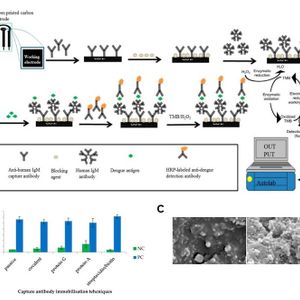
Nucleic acid testing is crucial for the prevention, diagnosis and treatment monitoring of many diseases in medicine. Over the last years, microRNAs (miRNAs), short non-coding RNAs, as biomar...
As the most common female malignancy, breast cancer is the most likely reason that a woman will die of cancer around the world. Breast cancer mortality has dropped in the U.S. by 35% since 19...
DATE: February 8, 2017TIME: 1:30pm PT, 4:30pm ETPerlara PBC, is a public benefit company committed to discovering small molecule therapeutics for rare genetic diseases. Our approach con...
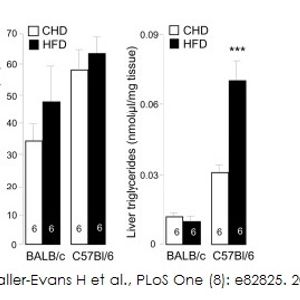
DATE: February 9, 2017TIME: 9:00am PT, 12:00pm ETTraditional models of liver fibrosis in rodents involve many weeks of induction, with frequent injections of a pro-fibrotic agent. The m...
Next-generation transcriptome and miRNome sequencing are routinely performed on traditional cell or tissue samples, as well as more difficult samples such as FFPE samples and biofluids. Regar...
The attractiveness of 3D printing technology in the microfluidic field is growing, specifically stereolithographic (SLA) type 3D printers, owing to their low cost, versatility, fast and easy...
Over the past decade, there has been increasing interest in more predictive model systems for disease and development. 3D cell culture models can serve both purposes, but can present challen...
The toxicology of particulate matter is complicated by characteristics not normally encountered when addressing poisonings associated with chemical substances. Particle shape, surface reacti...
LIMS systems are used extensively in laboratories everywhere. As a tool in the lab we need to be able to trust the system to have the necessary data integrity. Just like the analytical metho...
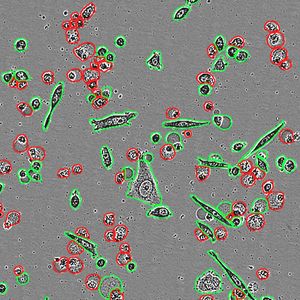
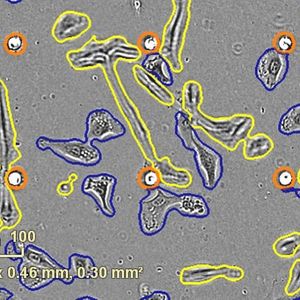
While live cell imaging offers advantages over traditional static imaging, this approach has been challenging for studying microbes due to the difficulty in tracking very small cells in a si...
In this webinar, we will present QIAGEN CLC Genomics Workbench and its utility for bacterial isolate identification, strain discrimination using core genome multi-locus typing (cgMLST) and d...
Learn how to optimize CRISPR-Cas9 editing efficiencies in cell lines and primary cell types using modified synthetic sgRNA. Includes tips for achieving maximum knockout and knock-in efficienc...

 Non-small cell lung cancer (NSCLC) accounts for more deaths than colon, breast, and prostate cancers combined. Of patients with NSCLC, 20% initially present with stage I or II disease, for w...















































![Anti-PRAME antibody [EPR20330]](https://d3bkbkx82g74b8.cloudfront.net/eyJidWNrZXQiOiJsYWJyb290cy1pbWFnZXMiLCJrZXkiOiJjb21wYW55X3Byb2R1Y3RfcHJvZmlsZV9pbWFnZV9mMzEwNTY4MGY1NmVmZjU3ZjZhMWRkZTU2M2Q4YjBmODZjMDJkNDE4XzMwMDA3MTg1ODEyLmpwZyIsImVkaXRzIjp7InRvRm9ybWF0IjoianBnIiwicmVzaXplIjp7IndpZHRoIjozMDAsImhlaWdodCI6MzAwLCJmaXQiOiJjb3ZlciIsInBvc2l0aW9uIjoiY2VudGVyIiwiYmFja2dyb3VuZCI6IiNmZmYifSwiZmxhdHRlbiI6eyJiYWNrZ3JvdW5kIjoiI2ZmZiJ9fX0=)