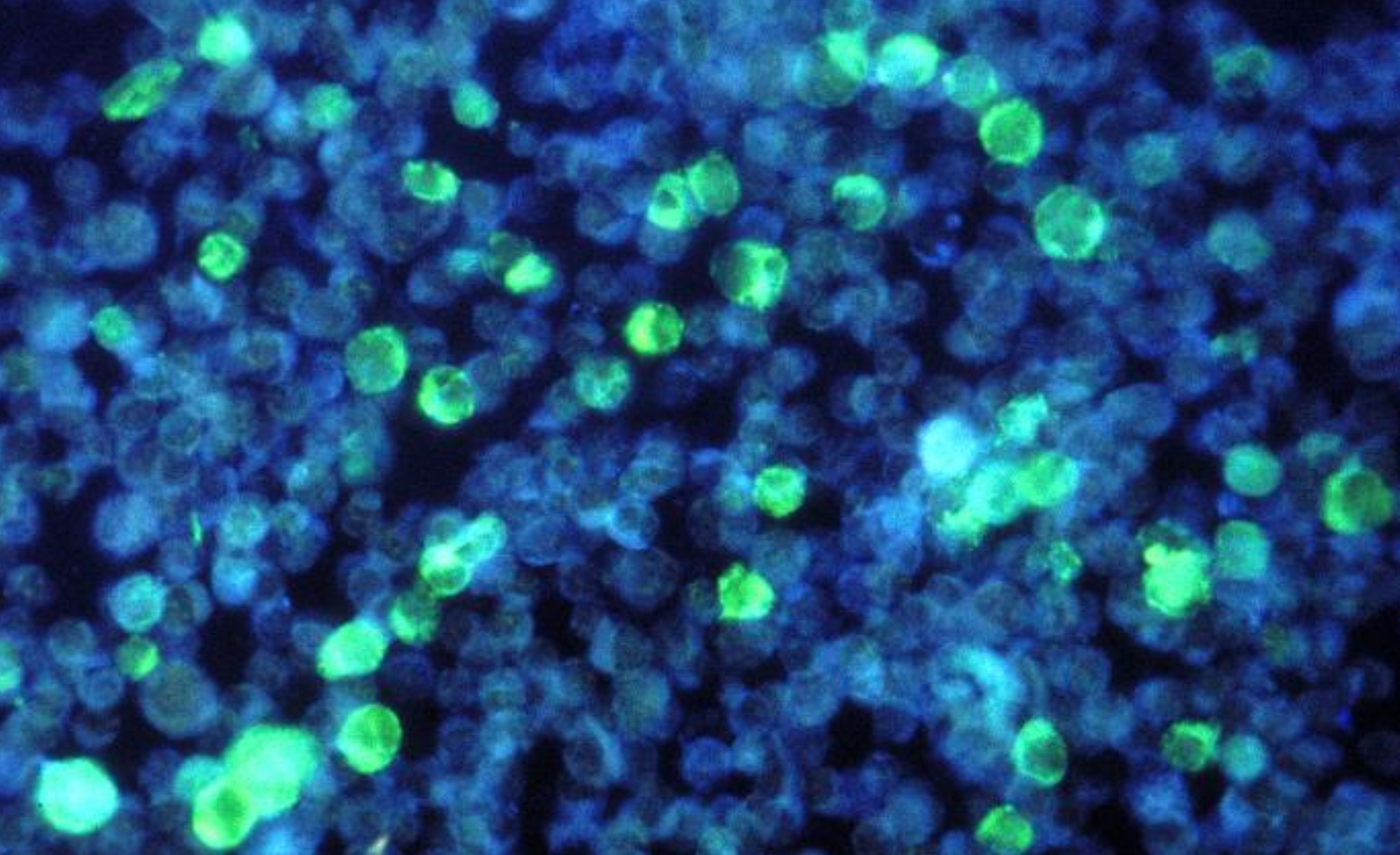
Multiple sclerosis (MS) is a disease in which the immune system erroneously attacks a protective insulation that surrounds neurons, known as myelin. As myelin degenerates, it leads to a variety of other problems with sensation and movement. MS can very significantly in severity from one patient to another. Although the exact causes of MS are still not known, evidence is mounting that Epstein-Barr virus (EBV) infections are related to the development of the disease, even though around 95% of healthy people carry evidence of a past EBV infection. However, the timing and severity of the EBV infection may matter; when an EBV infection leads to mononucleosis (also known as mono) in adolescence, it can cause a very strong immune reaction that increases MS risk significantly.
Now scientists have learned more about how the disease may arise when an EBV infection happens in a person who carries a specific genetic variant. This variant, a small change in the sequence of a gene, is often found in MS patients. The findings have been reported in Cell.
"In addition to EBV infection, genetic risk factors also play a role, in particular the so-called HLA-DR15 haplotype," noted senior study author Roland Martin of the University of Zurich (UZH).
The human leukocyte antigen (HLA) system is a crucial part of immunity. HLA molecules help the immune system identify cells that are part of the body (or self), and foreign invaders that must be eliminated. Immune cells called T cells can locate portions of EBV using the HLA-DR15 molecule.
EBV can also infect B cells, which are immune cells that are needed to create antibodies to fight infection. EBV can stick around in B cells for a lifetime.
T cells and antibodies made by B cells can usually control an EBV infection effectively and stop the reactivation of the virus, said Martin.
However, these immune cells may also identify parts of the self as invaders. So both T cells and B cells can become involved in the autoimmune dysfunction that arises in MS.
An EBV infection can also change gene expression in infected B cells to make them produce a myelin protein that is targeted in MS. Bits of this protein get displayed on infected B cell surfaces, with HLA-DR15; this complex is recognized by T cells. After immune cells become activated to attack this complex, they start to go after the myelin sheath that surrounds various neurons in the brain and spinal cord. The breakdown of myelin can lead to symptoms like fatigue and paralysis.
"Our study shows how the most important environmental and genetic risk factors can contribute to MS and trigger an autoimmune response that targets myelin components in the brain," Martin said.
Researchers are now trying to develop vaccines for EBV, which is also thought to be related to disorders like lupus, rheumatoid arthritis, and some types of cancer.
"Our findings reveal mechanisms that could be targeted by new therapies," added Martin.
Experienced research scientist and technical expert with authorships on over 30 peer-reviewed publications, traveler to over 70 countries, published photographer and internationally-exhibited painter, volunteer trained in disaster-response, CPR and DV counseling.