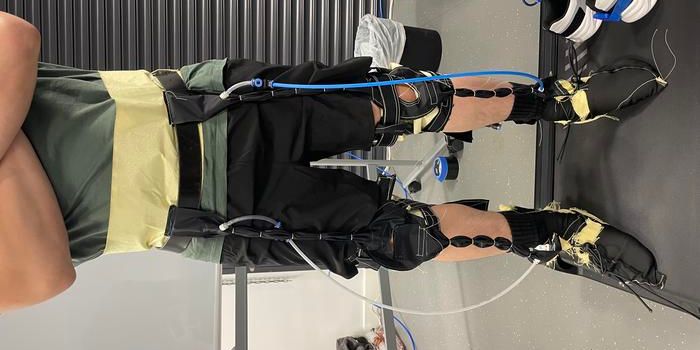
How do stingrays keep from crashing into the ocean floor as they effortlessly swim just above it? This is what a recent study published in the Journal of the Royal Society Interface hopes to address as a team of researchers investigated how robotic fins can be used to better understand how stingrays control their swimming. This study has the potential to help scientists and engineers use robotics to gain insight into animal behavior without unnecessarily invasive tactics.
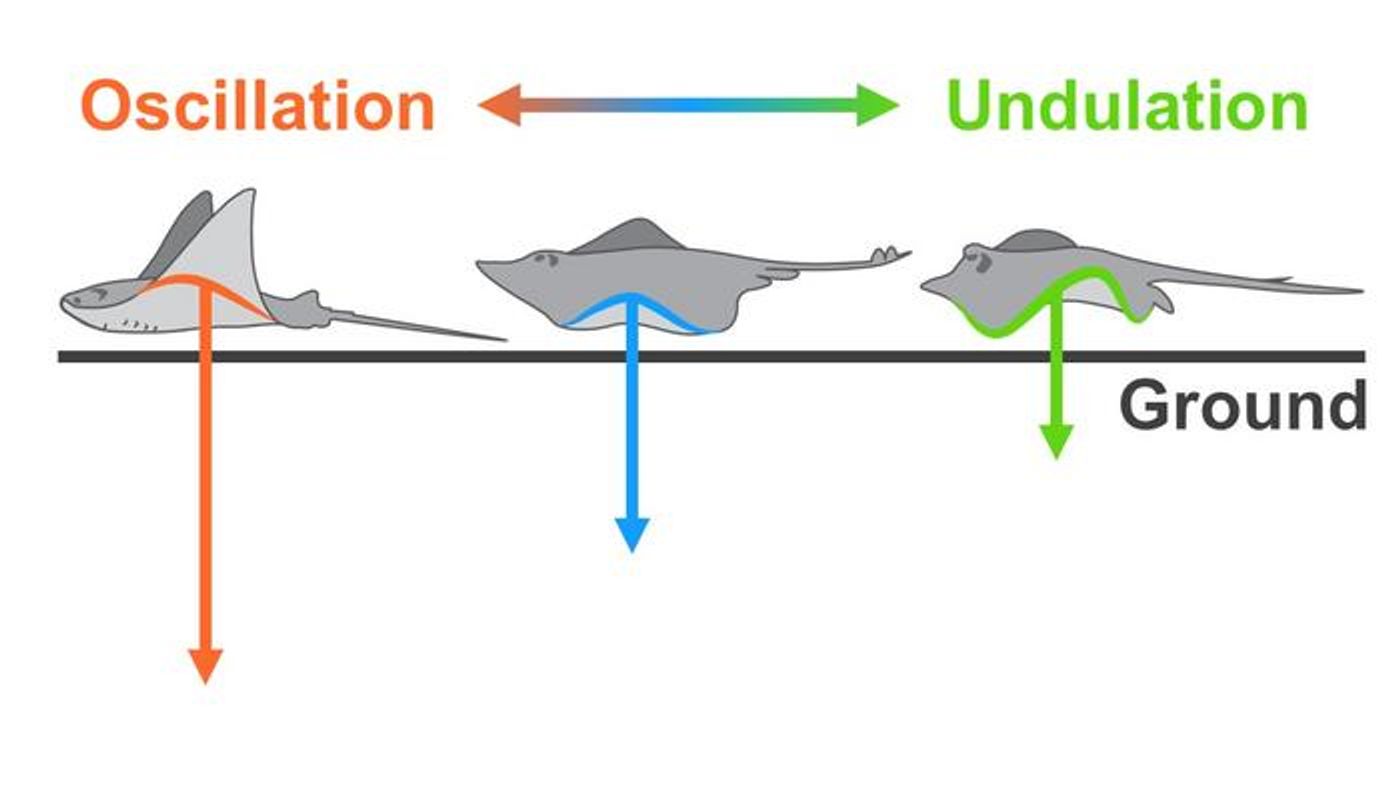
For the study, the researchers designed and built ray-inspired robotic fins to mimic the wave motions that stingrays exhibit when they’re swimming in the ocean. The motivation of this study comes from stingrays’ contrasting behavior on the ocean floor and open ocean, which exhibit high wavenumber and low wavenumber, respectively. The goal of the study was to ascertain the processes responsible for these varying wavenumbers, whether they are biological or hydrodynamic.
In the end, the researchers were surprised to discover that stingrays demonstrate negative left with traversing close to the ocean floor, which they note is opposite of what birds demonstrate when they’re flying close to the ground. The team discovered that stingrays swim tiled slightly upward, enabling them to scour the ocean floor with ease.
Credit: Yuanhang Zhu/UC Riverside
“This wasn’t what we expected,” said Dr. Yuanhang Zhu, who is an assistant professor of mechanical engineering at UC Riverside and lead author of the study. “Instead of gaining extra lift near the ground, the rays were pulled downward. But nature seems to have already solved the problem.”
This study builds on a growing list of research exploring how robotics can mimic animal behavior, including a 2025 study published in the Journal of Marine Science and Engineering that explored bio-inspired algorithms, communication, and design for scalable underwater robot swarms.
How will robotics help scientists better understand animal behaviors in the coming years and decades? Only time will tell, and this is why we science!
As always, keep doing science & keep looking up!
Sources: Journal of the Royal Society Interface, EurekAlert!, Journal of Marine Science and Engineering