
Interim Executive Director, Biodesign Institute Director, Biodesign Institute's Virginia G. Piper Center for Personalized Diagnostics; Virginia G. Piper Chair of Personalized Medicine; Pr
BIOGRAPHY
MAY 04, 2016 9:00 AM PDT
Cell free methods for producing protein microarrays
Presented at:
2016 Gibco ExpressionWorld
Speaker
Abstract
Self-assembling protein microarrays arrays can be used to study protein-protein interactions, protein-drug interactions, search for enzyme substrates, and as tools to search for disease biomarkers. In particular, recent experiments have focused on using these protein microarrays to search for autoantibody responses in cancer patients. These experiments show promise in finding antibody responses that appear in only cancer patients. New methods using click chemistry-based reagents also allow the application of these arrays for discovering new substrates of post translational modification.
Objectives
Objectives
- Learn different approaches to produce proteins for display on microarray platforms.
- Describe different uses of high-throughput protein display for identifying protein interactors or biomarkers.
You May Also Like
JAN 29, 2026 | 8:00 AM

Modern laboratories are under constant pressure to deliver results faster, more accurately, and with unwavering compliance. Organizations that harness next-generation LIMS capabilities gain...
FEB 17, 2026 | 3:00 PM

Alors que les soins de santé continuent d'évoluer vers des modèles accessibles et centrés sur le patient, les pharmacies de détail apparaissent comme d...
FEB 18, 2026 | 8:00 AM

With advancing food allergy research and emerging therapies, new allergy testing requirements arise. In this context, Basophil Activation Testing (BAT) has emerged as an essential component...
FEB 18, 2026 | 1:00 PM

Energy-efficient filtration solutions that reduce hidden chemical exposure from benchtop work and lab equipment to improve overall laboratory safety...
FEB 19, 2026 | 8:00 AM
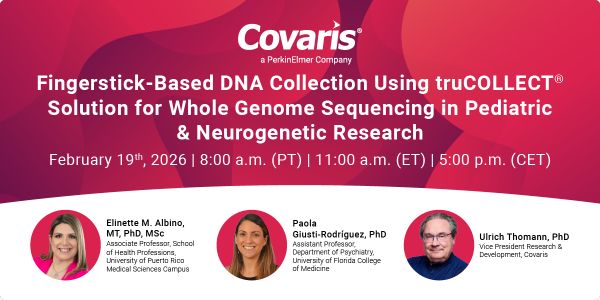
The collection of high-quality genomic DNA remains a major barrier in pediatric and neurodevelopmental research, particularly among children with autism spectrum disorder (ASD) and other neu...
FEB 23, 2026 | 11:00 AM
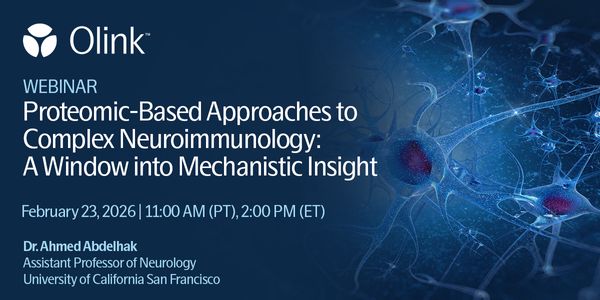
The timing of the biological onset of multiple sclerosis (MS) is unclear. We used high-throughput discovery proteomics and samples from presymptomatic patients with MS and matched healthy co...
Loading Comments...