
Head of Molecular Oncology Laboratory, General University Hospital Research Foundation

September 13 at 10:00am CEST, 9:00am BST
Webinar Series Part 2: The Future of Cutting-Edge Genomic Technologies for Liquid Biopsy Cancer Research
Speakers
-

Dr. Gorka Alkorta-Aranburu
Codirector, Genetics of solid and hereditary tumors, University of Navarra -
Matteo Allegretti, PhD
Translational Oncology Research Unit, RCSS Regina Elena National Cancer InstituteBIOGRAPHY


Date & Time
September 13 at 10:00am CEST, 9:00am BST
*Webinar airing too early or too late for you? This webinar will also be available:
September 13 at 9:30am IST, 12:00pm CST
https://www.labroots.com/ms/webinar/dpcr-liquidbiopsy-panel-2-ist
and
September 13 at 10:00am PDT, 12:00pm CDT, 1:00 EDT
and
September 13 at 10:00am PDT, 12:00pm CDT, 1:00 EDT
Abstract
Liquid biopsy is an emerging area of clinical research, particularly in the context of cancer. As a minimally invasive complementary or alternative approach to tissue biopsies, liquid biopsies are less risky, painful, and costly, and are increasingly being used to analyze biomarkers in liquid samples, such as blood. Recent advances in genomic technologies, such as digital PCR (dPCR) and next-generation sequencing (NGS), have enabled researchers to more comprehensively detect and study cancer-related mutations, even when they are very rare. With this panel of key opinion leaders in the liquid biopsy space, we dive deeper into the impact of genomics and genomics technologies on the current and future of liquid biopsy clinical research and cancer management. At Thermo Fisher Scientific we are committed to developing robust sample preparation solutions for cell-free nucleic acids and highly sensitive liquid biopsy assays utilizing both dPCR and targeted NGS to enable cancer driver identification, serial monitoring, and potential recurrence detection.
On-demand webinar Part 1: Enter event in auditorium to access
Webinar Part 2: Register to attend
Learning Objectives
- Discuss the features of digital PCR and its advantages in liquid biopsy research
- Understand the ways dPCR can be used to support precision medicine research
- Discuss the types of analytes used for dPCR analysis
- Define the current state of dPCR for routine monitoring of cancer patients and future trends
For Research Use Only. Not for use in diagnostic procedures.
Webinars will be available for unlimited on-demand viewing after live event.
Labroots is approved as a provider of continuing education programs in the clinical laboratory sciences by the ASCLS P.A.C.E. ® Program. By attending this webinar, you can earn 1 Continuing Education credit once you have viewed the webinar in its entirety.
You May Also Like
JAN 29, 2026 | 8:00 AM

Modern laboratories are under constant pressure to deliver results faster, more accurately, and with unwavering compliance. Organizations that harness next-generation LIMS capabilities gain...
FEB 17, 2026 | 3:00 PM

Alors que les soins de santé continuent d'évoluer vers des modèles accessibles et centrés sur le patient, les pharmacies de détail apparaissent comme d...
FEB 18, 2026 | 8:00 AM

With advancing food allergy research and emerging therapies, new allergy testing requirements arise. In this context, Basophil Activation Testing (BAT) has emerged as an essential component...
FEB 18, 2026 | 1:00 PM

Energy-efficient filtration solutions that reduce hidden chemical exposure from benchtop work and lab equipment to improve overall laboratory safety...
FEB 19, 2026 | 8:00 AM
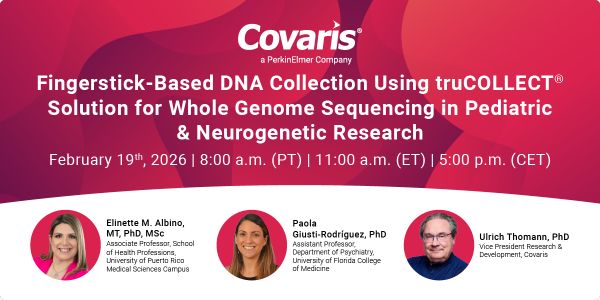
The collection of high-quality genomic DNA remains a major barrier in pediatric and neurodevelopmental research, particularly among children with autism spectrum disorder (ASD) and other neu...
FEB 23, 2026 | 11:00 AM

The timing of the biological onset of multiple sclerosis (MS) is unclear. We used high-throughput discovery proteomics and samples from presymptomatic patients with MS and matched healthy co...
Loading Comments...