Follow a comprehensive curation of novel and significant discoveries in the fields of genetics and genomics by watching these webinars. Highlighted areas of interest in the fields of genetics and genomics include epigenetics, molecular genetics, hereditary disease, clinical genetics, population genetics, etc.
Traumatic brain injury (TBI) is best characterized as brain dysfunction caused by an outside force, usually a violent blow to the head, often occurring as a result of a severe sports injury...
Nanopore sequencing has enormous potential in epigenetic applications; unlike traditional sequencing-by-synthesis technologies, it can distinguish covalently modified nucleotides directly th...
Pathogen detection and surveillance have become a high priority in both healthcare and environmental settings for the safety of patients and the general public. The COVID-19 pandemic highlig...
Arrayed gene knockout (KO) libraries represent a valuable resource for performing functional genomics screening. Current generation arrayed KO libraries for the whole human genome rely on eit...
Cas9 based therapeutics have the potential to revolutionize the treatment of genetic diseases. However, safe and effective methods for delivering Cas9 protein, gRNA and donor DNA need to be...
The ability of single-cell RNA-Seq (scRNA-Seq) to measure the transcriptional basis of heterogeneity between individual cells is transforming biomedical research. It enables the precise &lsq...
Variant interpretation presents a bottleneck for many labs, posing a challenge to the broader adoption of precision medicine. The ACMG/AMP variant classification framework has provided a foun...
One of the central tenants of biology is that our genetics—our genotype—influences the physical characteristics we manifest—our phenotype. But with more than 25,000 human ge...
It was 10 years ago that Illumina first launched the Genome Analyzer II, the world’s first high-throughput sequencing platform. That system could produce one billion bps of sequen...
The clustered regularly interspaced short palindromic repeats (CRISPR)-CRISPR-associated proteins (Cas) system is a bacterial defense mechanism that uses RNA-guided enzymes to cut specific s...
As viral threats continue to emerge, viral detection assays are important not only for recognizing if a virus is present, but also for surveillance and variant characterization. Accurate det...
This session provides an overview of how the applications for infectious disease and microbiology on the MISeq i100 Series can support genomic surveillance for managing disease outbreaks, co...
Structural variants (SVs), defined as rearrangements of genomic sequences, are both a major source of genetic diversity in human populations and are also directly responsible for the pathogen...
Graphene-based Biology-gated Transistors (Cardean Transistors) directly read molecular signals of active biology using advanced electronics. This proprietary tech breakthrough can be used as...
5-fluorouracil (5-FU) and its oral analog capecitabine are fluoropyrimidine chemotherapy agents used in several solid tumors. Approximately 5% of patients inherit diminished or null activity...
Learning Objectives: 1. Describe alternative (non-B) DNA structures, how prevalent are they and what are their biological implications? 2. Explain why non-B DNA structures might be relevant...
Microbial communities include distinct lineages of closely related organisms which have proved challenging to separate in metagenomic assembly. Challenges include the existence of highly rel...
Achieving a diagnosis in rare disease patients can be challenging for even the most experienced clinician or scientist, creating a barrier to delivering truly personalised care. An exome seq...
Performance. Automation. Convenience. Versatility. Those three elements exemplify the Miltenyi Biotec family of flow cytometers. Designed to support the field of flow cytometry, the MACSQuan...
Pharmacogenomics has had rapid implementation over the past decade, with recent growth in application in oncology, mental health, solid organ transplantation, and more. There has been much f...
Boston Children’s Hospital is developing the infrastructure needed for large-scale psychiatric research and treatment discovery. The Manton Center for Orphan Disease Research and...
Infectious gastroenteritis is a disease caused by bacterial, viral, and parasitic pathogens in which the small and/or large intestines become severely inflamed. Because infectious gastroenter...
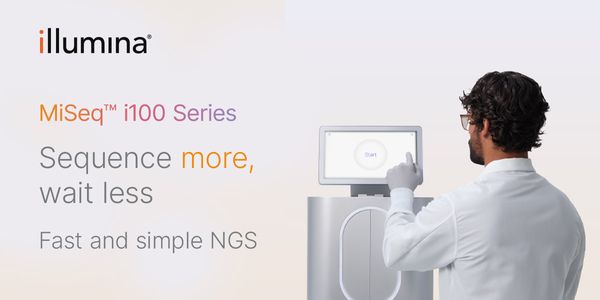
This session provides an introduction to the MiSeq i100 Series, the simplest, fastest benchtop sequencer. Giving a brief overview of the revolutionary technology that's been built into the n...
While CRISPR-Cas9 has dominated the science headlines in recent years, there has been a broad social and moral consensus that it is too soon to move to clinical use of genome editing in human...
Learning Objectives: 1. Identify different kinds of genomic resources 2. Learn to apply the features available in genomic resources to cancer variant interpretation 3. Describe the importanc...
Somatic mutations that arise during development are increasingly recognized as contributors to neurodevelopmental disease. One challenge has been to determine how mosaic mutations contribute...
 Traumatic brain injury (TBI) is best characterized as brain dysfunction caused by an outside force, usually a violent blow to the head, often occurring as a result of a severe sports injury...